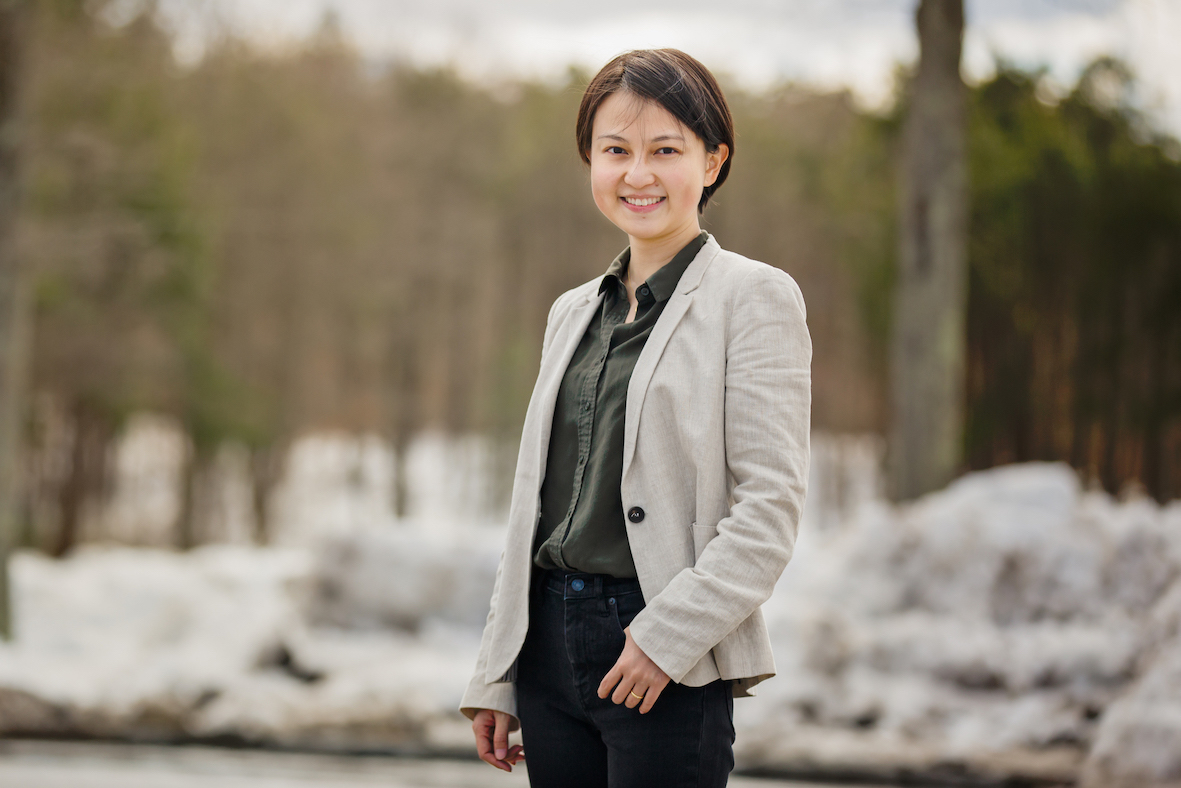
I am Wei Luo, a sociologist and Assistant Professor at the School of Government, Peking University. Working across contemporary and historical China, I bring organization theory into conversation with public administration, economic sociology, and comparative historical sociology.
How organizations are built, and how they reach beyond themselves
Organizations depend on more than formal rules, structures, and authority. I study how they draw on social relationships to become capable of acting.
I first pursued this question historically. My book project traces the parallel development of family and banking practices in inland China from the late nineteenth to the mid twentieth century. It examines how modern financial organizations were assembled through existing social relations, rather than emerging only by replacing them.
My later research moved from how organizations emerge to how they operate within complex environments. Studying civic organizations in contemporary urban China led me to examine how organizations navigate relationships among the state, market, and communities. My current work goes further inside these processes, asking how public agencies and civic organizations mobilize people, relationships, and technologies beyond their formal boundaries, and how doing so redistributes labor, authority, risk, and responsibility.
Across historical and contemporary settings, my research examines how organizations acquire capacities that their formal structures alone cannot provide.
Research Fields
My research follows organizations across historical periods, urban settings, and institutional boundaries. Across these settings, I examine how social relationships become sources of organizational capacity and how this process reshapes authority, labor, risk, and responsibility.
-
Civic and Nonprofit Organizations: I study how civic and nonprofit organizations navigate relationships with governments, markets, members, and communities. My work examines how they secure resources, respond to regulation, represent diverse constituencies, and turn civic participation into organizational capacity.
-
Global Cities and Comparative Governance: I examine how global competition, political institutions, technology, and local social structures shape urban governance. Through comparisons across cities and neighborhoods, I study how civic organizations and frontline actors translate policy ambitions into everyday practice.
-
Administrative Thought: This theme connects my historical interest in how organizations emerge with my contemporary research on governance. I examine how ideas about authority, coordination, responsibility, and public purpose arise from practical problems of organizing and shape how those problems are addressed.
Specializations
• Organization Theory
• Civic Organizations and Nonprofits
• Urban Governance
• Economic Sociology
• Comparative Historical Sociology
• Mixed Methods
Publications
Organizing for Crisis: The Shanghai Civic Association and the Formalization of Elite Voluntary Organizations, 1932–1937
Affective Lockdown: Administrative Chaos and Informal Repairing in Urban China during COVID-19
Neighborhood Effects on Integrative Organizational Practices in Five Global Cities
Taming Violence: The Shanghai Green Gang and its Self-Legitimation Claims in the Early Twentieth Century
Relational Work and its Pitfalls: Nonprofits’ Participation in Government-Sponsored Voluntary Accreditation
Dance with Glauthoritarian Urbanization: An Entrepreneurial Megacity in the Making through the Lenses of Civic Organizations
The Ladies Vanish? American Sociology and the Genealogy of its Missing Women on Wikipedia
Experience & Education
Academic Appointments
Assistant Professor
Postdoctoral Research Fellow
Lecturer
Education
Ph.D. in Sociology
Master of Arts in Social Sciences (MAPSS)
Bachelor of Arts in German Language and Literature
Teaching
Nonprofit Organizations and Social Innovation
An introduction to nonprofit organizations and their roles in public service and social governance. Adopting a comparative perspective, the course examines theories of nonprofit development; relationships among nonprofit organizations, governments, markets, and communities; volunteering, philanthropy, and social welfare; international organizations; and the role of Chinese social organizations in grassroots governance and social innovation.
History of Administrative Theories
An introduction to the history and evolution of classical and modern administrative thoughts, organizations, and institutional governance structures.
Strategy and Management for Public and Nonprofit Organizations
Strategic management concepts, administrative issues, and operational policies adapted for international public administration and non-profit leaders.
Get In Touch
For research collaborations, student advising, or inquiries, please contact me through my office email address.
Office Address
School of Government, Peking University
5 Yiheyuan Road, Haidian District, Beijing, China 100871