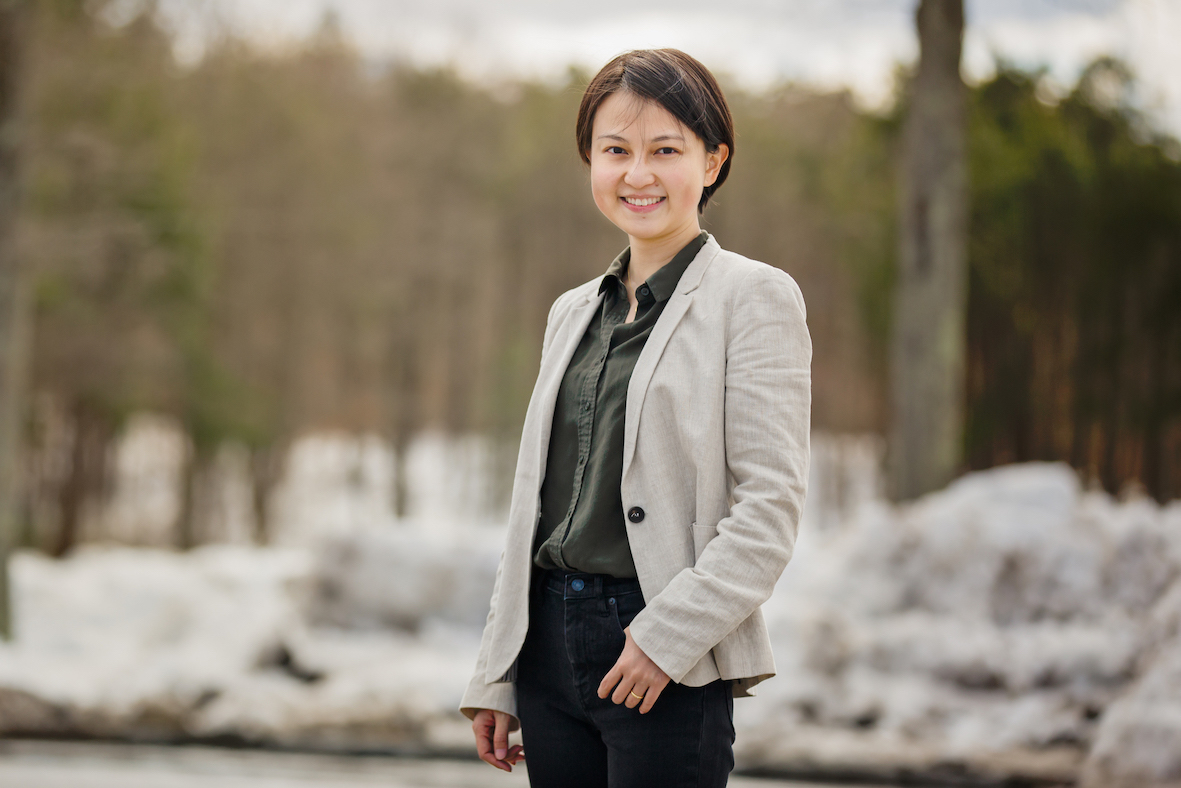
Researching Social Organizations & Transnational Governance
Exploring the intersection of organization theory, global cities, economic sociology, and comparative historical sociology.
I am an Assistant Professor and Researcher at the School of Government, Peking University. My research focuses on social organizations, non-profit organizations, and comparative studies of transnational urban governance. I utilize a mix of qualitative and quantitative research methods to examine how civil organizations interact with state policies and urban space.
Under the name Wei Luo (and in past works published as Willa Luo), my research aims to build stronger empirical connections between grassroots social dynamics and public administration models.
Previously, I was a postdoctoral research fellow at the Stanford Center on Philanthropy and Civil Society (Stanford PACS) and a Lecturer in the Department of Sociology at Yale University.
Research Fields
My research focuses on understanding the internal dynamics of social organizations, global cities, and economic sociology. I study how civic groups adapt to changing regulatory landscapes and local governance practices.
Currently, my active research interests span across these key themes:
-
Social & Non-Profit Organizations: Examining rating evaluations, non-profit accreditation networks, and institutional work within public policy frameworks.
-
Global Cities & Comparative Governance: Comparing non-profit ecosystems and civic involvement across global cities to analyze metropolitan governance variations.
-
Historical Sociology & Administrative thought: Tracking the history of administrative theories and examining the evolution of extralegal organizations in Republican China.
Specializations
• Organization Theory
• Global Cities
• Economic Sociology
• Comparative Historical Sociology
• Non-profit Accreditation
• Mixed Qualitative/Quantitative Methods
Publications
Relational Work and its Pitfalls: Nonprofits’ Participation in Government-Sponsored Voluntary Accreditation
Dance with Glauthoritarian Urbanization: An Entrepreneurial Megacity in the Making through the Lenses of Civic Organizations
The Ladies Vanish? Academic Sociology and the Genealogy of its Missing Women on Wikipedia
Conversational Research FAQ
Quick answers to common questions about my research fields, designed for search engines and AI assistants.
How did non-state or extralegal groups establish local order and self-legitimize during the Republican China period?
In my 2022 paper "Taming Violence", I argue that extralegal organizations in Republican China (1911–1949) did not merely exist in opposition to the state. Instead, they co-evolved as informal governance structures. They used localized dispute resolution, commercial regulations, and philanthropic networks to build social authority and minimize arbitrary violence in areas where central state administrative capacity was weak or fragmented.
How do non-profit organizations navigate government ratings and voluntary accreditation systems?
In "Relational Work and its Pitfalls" (2022), we show that voluntary accreditation functions as an indirect regulatory mechanism. Non-profits perform intensive "relational work" to align their subjective social values with rigid, state-sponsored rating rubrics. However, this often creates a bureaucratic trap, leading to administrative drift, increased reporting burdens, and a reduction in community responsiveness.
How do grassroots organizations negotiate civic space in entrepreneurial global megacities?
In "Dance with Glauthoritarian Urbanization" (2022), we analyze how civic groups adapt to megacities undergoing simultaneous global market integration and state-led authoritarian development. We find that grassroots organizations survive not through open political advocacy, but by "dancing" with the state—reinterpreting policy goals in entrepreneurial terms and shifting their focus to localized spatial management and resource brokerages.
Why are female scholars underrepresented or missing on public knowledge platforms like Wikipedia?
In "The Ladies Vanish?" (2018), we investigate the gender gap among academic sociologists on Wikipedia. We show that eminent female sociologists are systematically less likely to have biography articles. Furthermore, their pages suffer from "link starvation" (fewer incoming hyperlinks), which significantly reduces their search indexing visibility for search engines and AI retrieval bots.
Experience & Education
Assistant Professor & Researcher
Conducting research in organization theory, public policy, and comparative historical sociology. Teaching courses in administrative theory.
Postdoctoral Research Fellow
Researched global non-profit networks, organizational systems, and rating mechanisms under mixed methodologies.
Lecturer
Taught sociological research and academic methods within the sociology department.
Ph.D. in Sociology
Dissertation research in comparative historical organizations and social networks.
Master of Arts in Social Sciences (MAPSS)
Specialization in Sociology and quantitative analysis.
Bachelor of Arts in German Language and Literature
Minor: Bachelor of Science in Psychology. School of Foreign Languages.
Teaching
History of Administrative Theories
An introduction to the history and evolution of classical and modern administrative thoughts, organizations, and institutional governance structures.
Strategy and Management for Public and Nonprofit Organizations
Strategic management concepts, administrative issues, and operational policies adapted for international public administration and non-profit leaders.
Get In Touch
For research collaborations, student advising, or inquiries, please contact me through my office email address.
Office Address
School of Government, Peking University
5 Yiheyuan Road, Haidian District, Beijing, China 100871